What readers usually run into
- Kleine Zahlen
- Schwache Rasterlinien
- OCR-Tabellenprobleme
- Kontrastarme Zellen
Why tables need extra care
Tables rely on alignment. If cleanup shifts a column, weakens a grid line, or changes small digits, the page may look cleaner but become less useful. Table scans also often contain tiny numbers that are easy to damage with aggressive contrast changes.
Specify layout preservation
Your prompt should say to keep row alignment, column widths, grid lines, and handwriting unchanged. Ask for clearer text and background cleanup without table extraction, reformatting, or interpretation.
Review small values
After generation, zoom into the smallest numbers, totals, decimal points, check marks, and handwritten notes. Compare suspicious values against the original before exporting.
What this is not
This workflow does not convert a scanned table into Excel, CSV, or editable cells. It produces a cleaner image-based PDF page for reading, sharing, or later OCR with a dedicated tool.
Before and after evidence for tables
The best before and after comparison is a local zoom on the densest part of the table. Check row labels, small numbers, decimal points, grid intersections, and handwritten ticks. A clean-looking page is not enough if a faint vertical rule disappears or a decimal point becomes ambiguous. For tables, usefulness depends on preserving structure as much as improving contrast.
How to phrase table prompts
Use language that forbids restructuring. Ask to preserve row alignment, column widths, grid lines, and all values. If the table has handwritten marks, mention them. If it has formulas or footnotes, mention those too. Avoid prompts that say "recreate," "extract," or "convert" unless you are using a different tool designed for data extraction.
When OCR or spreadsheet tools come later
If your final goal is spreadsheet data, first create the clearest faithful scan you can, then use a dedicated extraction workflow. Keep the cleaned image as a reference because table extraction often makes mistakes in merged cells, blank cells, and repeated headers. RedesignPDF helps create a readable source image; it does not validate the extracted data.
Table-specific export checklist
Before exporting a cleaned table, inspect the first row, last row, narrowest column, and any cells with small decimals or handwritten corrections. Check whether grid lines still separate values clearly. If the table spans multiple pages, confirm that headers and repeated labels remain consistent. A cleaned table page is successful when it is easier to read without making the reader wonder whether the structure changed.
Example prompt for scanned tables
A table prompt should be strict: "Clean the scanned table, reduce gray background, strengthen small numbers and grid lines, preserve row alignment, column widths, handwritten marks, and all values." Add "do not extract, convert, or reinterpret the table" if there is any risk of confusion. This wording keeps the task visual and helps avoid changes that would make the table look cleaner but less reliable.
Related example to compare
Use a scanned table example to judge whether the after image preserves structure. The grid should still guide the eye, small values should stay separated, and handwritten marks should not become noise. If a result changes the apparent structure, it is not acceptable even if the page background looks cleaner. Accuracy matters more than visual neatness, especially for financial or scientific tables. Recheck totals manually before export or OCR, then keep the original scan.
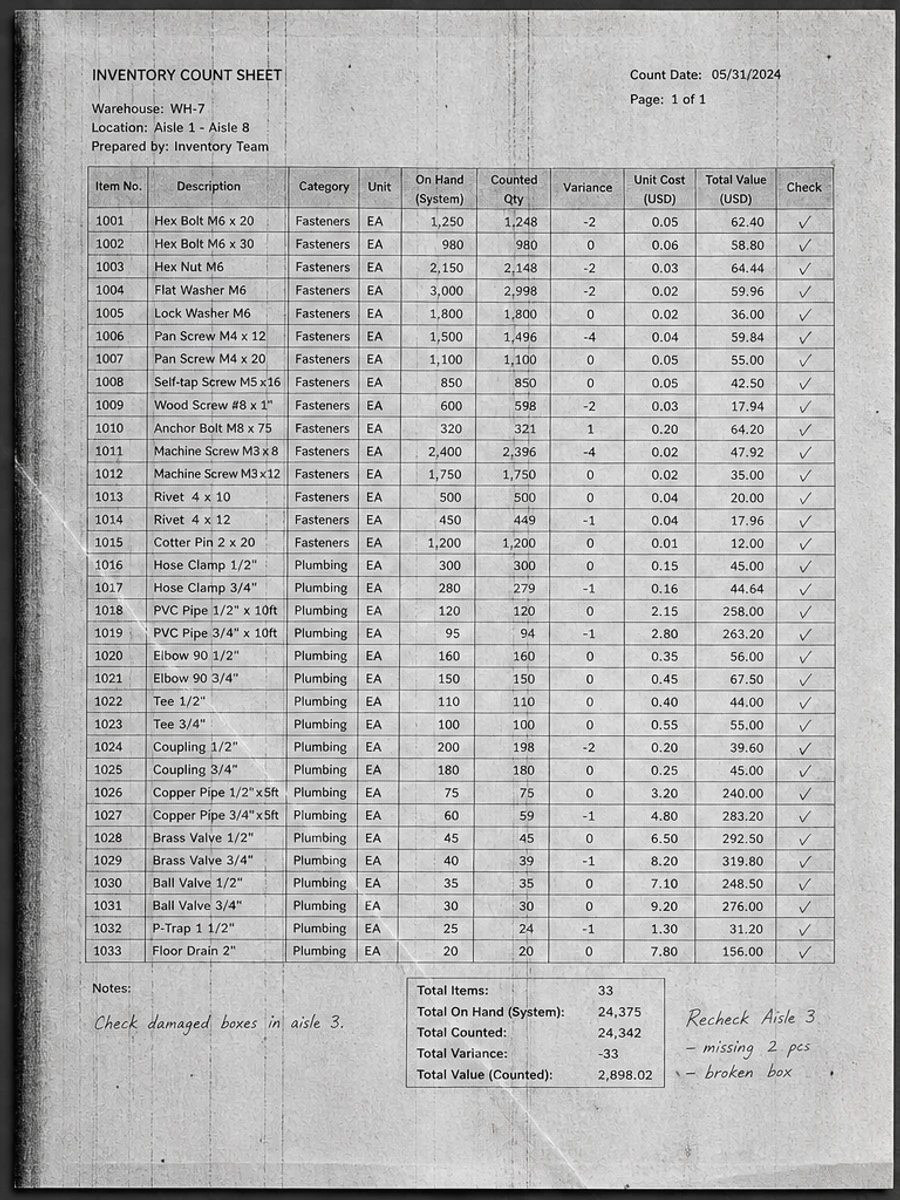
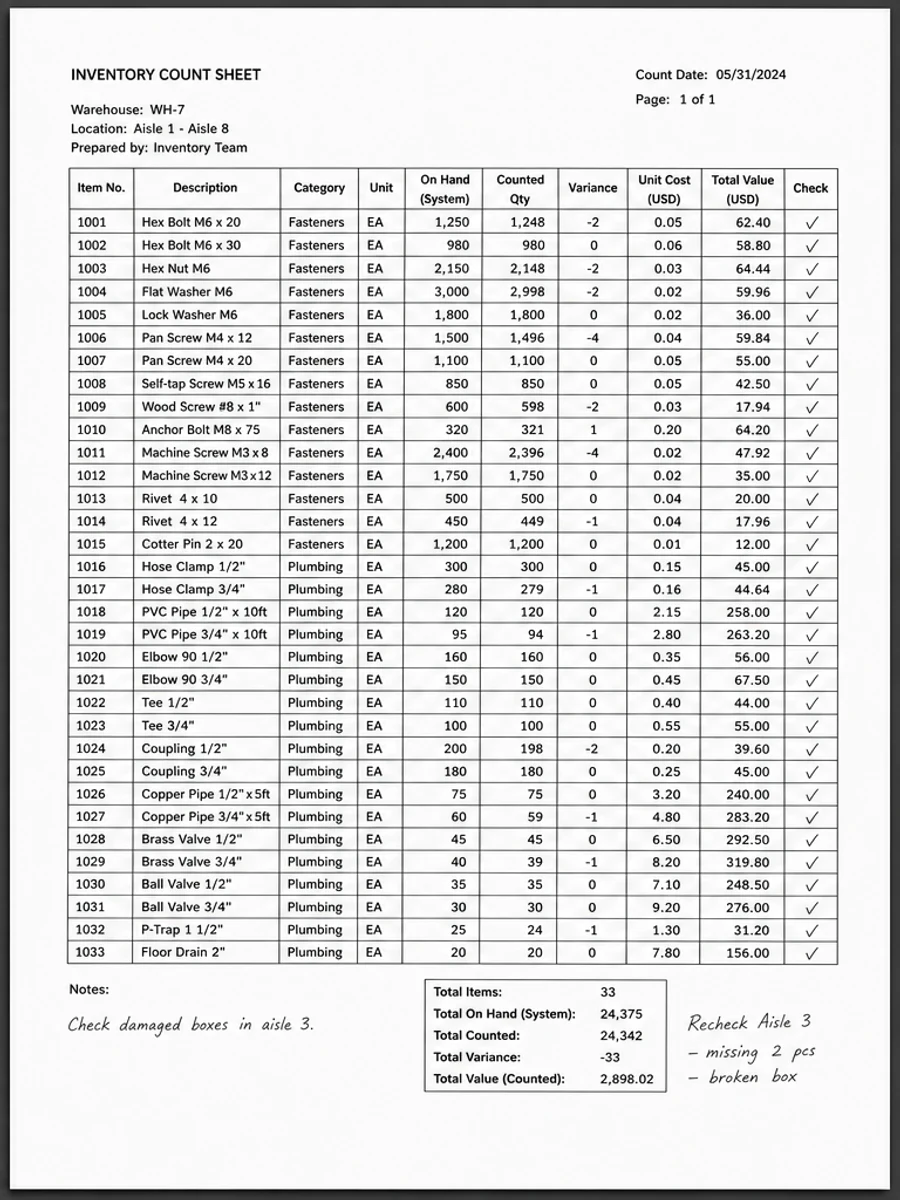
Inline before and after example: Eine gescannte Tabelle ohne Layoutänderung bereinigen
Step-by-step tutorial
- Öffne das gescannte PDF.
- Wähle zuerst eine Seite mit dem Problem „gescannte Tabellen ohne Layoutänderung bereinigen“.
- Nutze einen konservativen Prompt zur Lesbarkeitsverbesserung.
- Vergleiche Vorher und Nachher.
- Prüfe wichtige Texte, Zahlen, Daten und Tabellen.
- Exportiere erst, wenn das Ergebnis passt.
Prompts you can paste
01Bereinige diese gescannte PDF-Seite und verbessere gescannte Tabellen ohne Layoutänderung bereinigen; reduziere grauen Hintergrund, Schatten, Flecken und Rauschen bei gleichem Layout.
02Verbessere die Lesbarkeit vorsichtig: blassen Text abdunkeln, Hintergrund säubern und Handschrift, Stempel, Tabellen und Markierungen erhalten.
03Konservativ verarbeiten, keine OCR-Textebene erstellen und die Seitenstruktur nicht verändern.
When RedesignPDF is a good fit
- Gescannte PDF-Seiten mit sichtbarem Text
- Flache oder bildbasierte Dokumente
- Dateien, bei denen visuelle Lesbarkeit das Ziel ist
When it is not the right tool
- Präzise Bearbeitung von PDF-Textebenen
- Zertifizierte rechtliche Restaurierung
- Automatische Datenerfassung ohne Prüfung
Häufige Fehler
- Die Seite so stark aufhellen, dass feine Linien verschwinden.
- Visuelle Bereinigung mit OCR oder Textkonvertierung verwechseln.
- Exportieren, ohne Zahlen, Daten, Tabellen und Handschrift zu prüfen.
Related reading
FAQ
Kann RedesignPDF gescannte Tabellen ohne Layoutänderung bereinigen verbessern?
RedesignPDF kann das sichtbare Bild der gescannten Seite verbessern. Prüfe wichtige Texte, Daten, Beträge und Tabellen vor dem Export.
Hat der Export auswählbaren Text?
Der Export kann bildbasiert sein. Nutze OCR separat, wenn du durchsuchbaren oder auswählbaren Text brauchst.
Ist das für offizielle Dokumente geeignet?
Nur mit Vorsicht. RedesignPDF dient der Lesbarkeit, nicht der zertifizierten Dokumentrestaurierung.
Conclusion
If your goal is a clearer scanned PDF while keeping the original layout, start with a conservative prompt, process one page, and review text, tables, numbers, handwriting, and stamps before exporting. If you need editable text, PDF-to-Word conversion, form filling, or precise text-layer editing, use OCR, a PDF editor, or a better rescan instead.
Upload scanned PDF